
The problem isn't just nice leaders. It's nice cultures.
Writing in Harvard Business Review, Ron Ashkenas (coauthor of the Harvard Business Review Leader's Handbook and a Partner Emeritus at Schaffer Consulting) and Gali Cooks (President & CEO, Leading Edge) take their earlier argument about individual leaders and apply it to the organizations they lead.
When a culture is organized around comfort and consensus, it tends to avoid the things that actually drive results: honest feedback, real accountability, and hard tradeoffs. Fixing this, the authors argue, isn't a matter of one tough conversation. It requires senior leaders to consistently model and reward candor, to show early proof that difficult choices lead to better outcomes, and to rebuild the routine structures of organizational life, like review meetings and governance processes, so they actually surface disagreement instead of smoothing it over.
Read this alongside Ashkenas and Cooks's January HBR piece on individual leadership style, "Is Your Leadership Style Too Nice?", for the fuller picture: nice people build nice cultures, and both need to change together.
Related Resources
View the Resource Library
 ArticleLeadership
Is Your Leadership Style Too Nice?
Many leaders mistake being “nice” for being effective, avoiding hard conversations and decisions in ways that ultimately undermine organizational performance. The authors argue that being “good” instead requires clear accountability, candid feedback, disciplined decisions about roles and retention, and sustained strategic focus. Organizations that engage in these activities see stronger engagement, growth, and lasting impact.
 ReportOrganizational Culture
State of Jewish Nonprofit Talent 2025
We are not maximizing the full potential of our people — yet. In 2025, Leading Edge conducted three major studies, yielding insights based on data from over 200 CEOs, over 3,000 people outside the Jewish nonprofit sector, and over 13,000 current Jewish nonprofit employees. This report illustrates how and why the Jewish nonprofit sector is not yet fully maximizing the potential of its talent.
 ReportOrganizational Culture
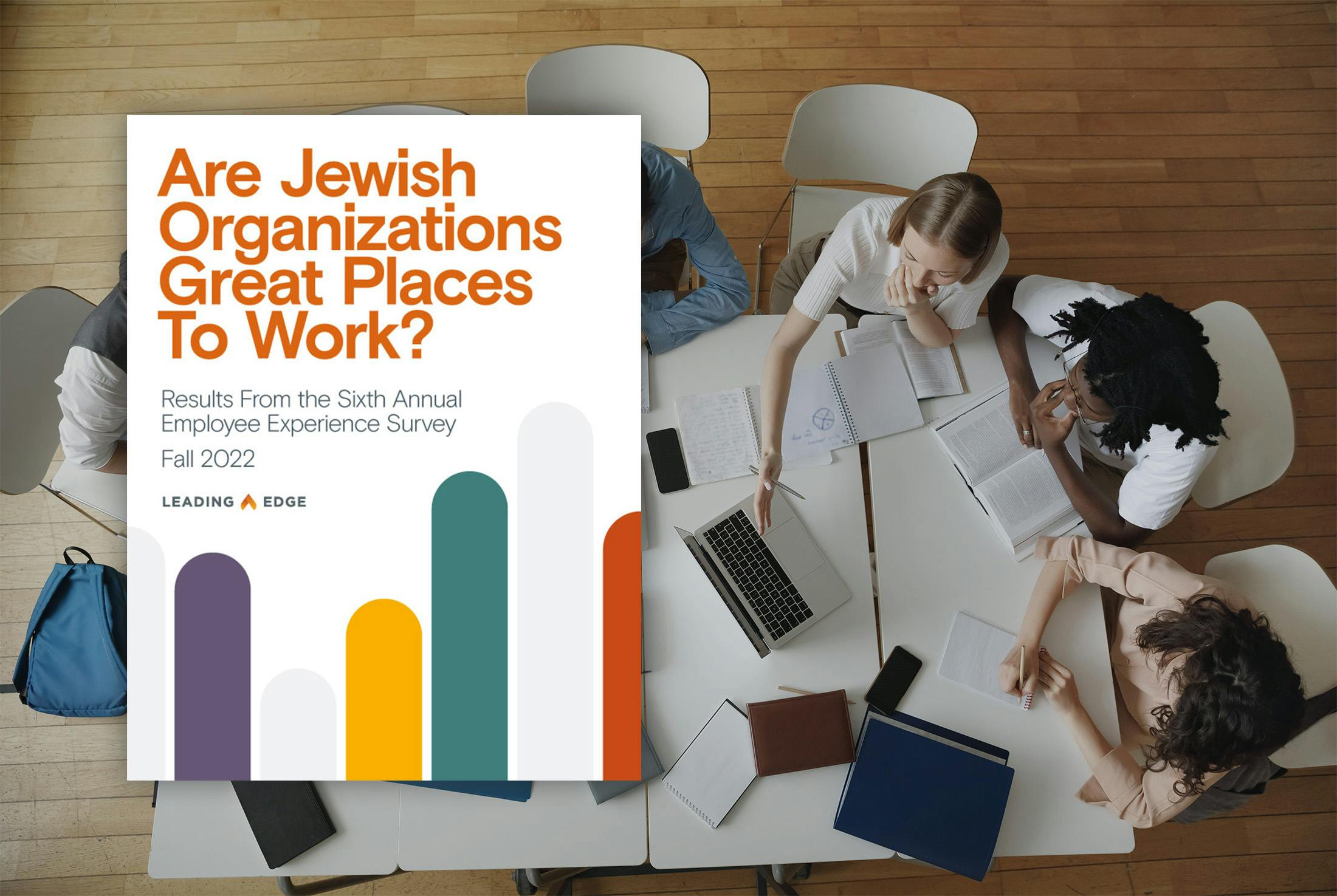
Are Jewish Organizations Great Places to Work? Results from the Sixth Annual Employee Experience Survey (2022)
Are Jewish organizations great places to work? Not yet—but we’re striving.
Loading footer...